
Ferhat Gölge
Computer Worker
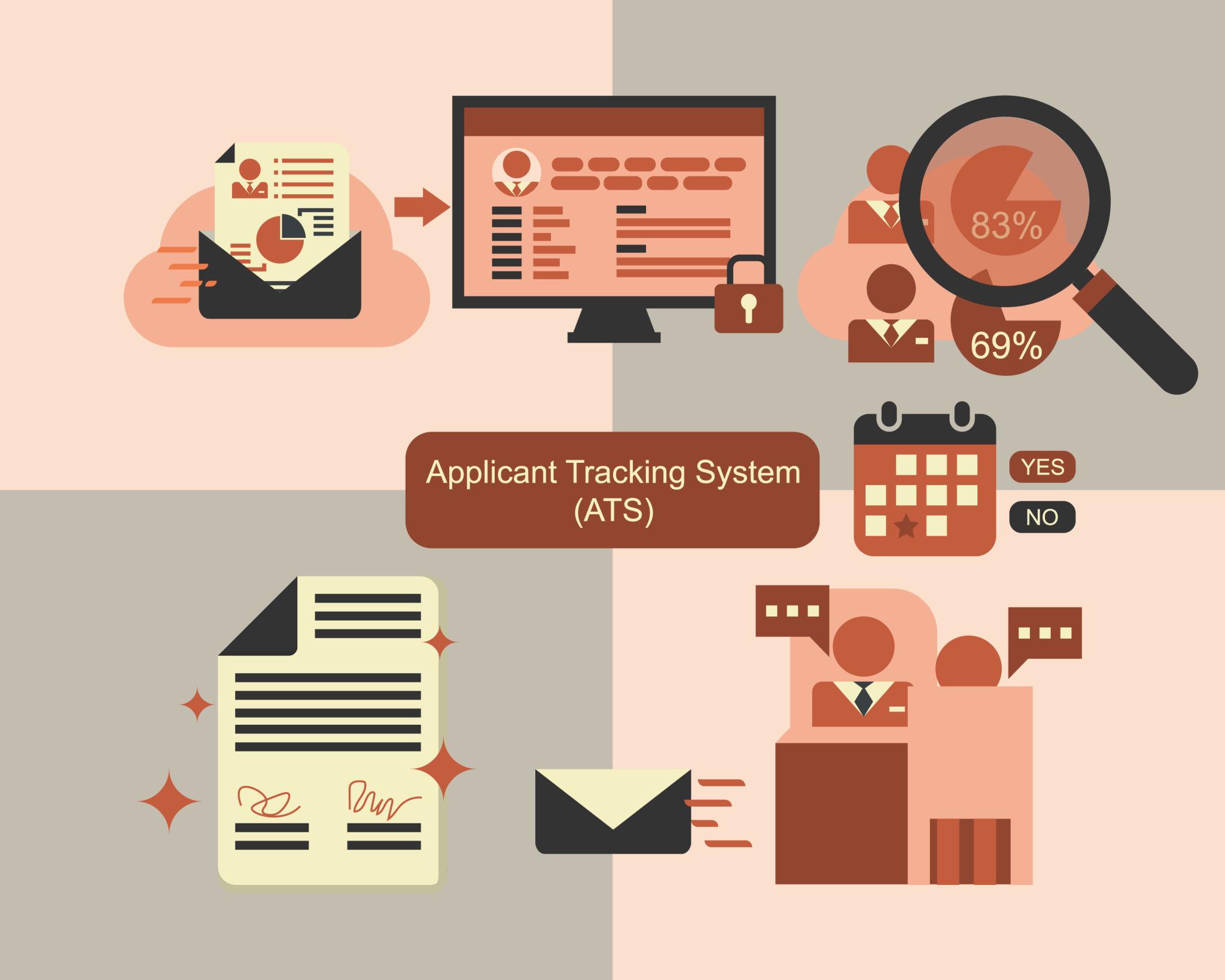
What you need to know to prevent your CV from being rejected before it reaches people.
What is ATS? What you need to know to prevent your CV from being rejected before it reaches people.
Today, many companies filter job applications through software called ATS (Applicant Tracking System) instead of sending them directly to human resources teams.
These systems automatically analyze submitted CVs and score them according to specific criteria, forwarding only the most suitable candidates to human resources.
In other words:
Your CV is first read by software, then by a human.
If your CV isn't ATS-compliant, it may be rejected without even being seen, even if you're a very good programmer, designer, or manager.
How does ATS work?
ATS systems essentially do three things:
- It parses (separates) the text within the CV.
- It analyzes keywords.
- Calculates the job posting match score.
For example, if a job advertisement mentions the following technologies:
- Laravel
- REST API
- Docker
- MySQL
ATS systems search your CV for these keywords and assign a score based on the match rate .
Key Elements ATS Systems Looks For in a CV
ATS systems pay particular attention to the following sections:
1. Professional Summary
A brief summary located at the top of the CV.
Example:
This section is very important from an ATS perspective because keywords are usually concentrated here.
2. Skills Section
ATS systems primarily analyze the skills section.
For a sample software developer:
3. Experience Section
ATS systems analyze not only the job title but also the work performed.
A weak example:
A strong example:
ATS's Least Favorite CV Mistakes
Many CVs are rejected not because of poor content, but because of incorrect formatting .
The most common mistakes:
1. Use of graphics and icons
ATS cannot read some characters.
For example:
Instead, the following should be used:
2. Complex design
ATS systems have difficulty reading the following structures:
- two-column CV
- text box
- layout created with a table
- graphic skill bars
The safest format:
Single column and plain text.
3. PDF format is not always safe.
Some ATS systems cannot correctly parse PDF files.
The safest format:
DOCX
4. CV in a mix of Turkish and English.
International ATS systems generally operate in English.
Example error:
More accurately:
Golden Rules for an ATS-Compliant CV
For a CV to be ATS compliant, the following rules are important:
- Use a simple design.
- Use a single-column layout.
- I prefer the DOCX format.
- Use the keywords in the job advertisement.
- Keep the Skills section extensive.
- Use bullet points in the Experience section.
- Avoid using unnecessary graphics and icons.
Websites Where You Can Check Your ATS CV for Free
Here are some free tools you can use to test your CV's ATS compatibility:
- resumeworded.com
- jobscan.co
- resumego.net
- skillroads.com
These tools typically perform the following analyses:
- ATS score
- keyword match
- recruiter feedback
The Secret to Passing the ATS
Passing the ATS (Automatic Test System) isn't actually difficult.
The basic principle is this:
Write your CV with the mindset that a software program will read it first.
A good CV:
- readable
- rich in keywords
- simple
- results-oriented
should be.
Remember:
Passing the ATS is the first step to getting the job.
Keywords: Developer, Resume, What is ATS, Recruitment, Career
Frequently Asked Questions
Why is my CV rejected before reaching a recruiter?
Most companies use an Applicant Tracking System (ATS) to screen CVs before a human reviews them. If your CV doesn’t meet certain criteria such as keywords, formatting, or relevance, it may be automatically rejected.
How does an ATS evaluate a CV?
An ATS scans your CV, analyzes its content, and compares it with the job description. If your CV lacks relevant keywords or uses an incompatible format, it may receive a low score and be filtered out.
How can I create an ATS-friendly CV?
To make your CV ATS-friendly:
Use keywords from the job description
Choose a simple, single-column layout
Use standard headings (e.g., Experience, Skills)
Save your CV as a .docx or compatible PDF
What mistakes cause a CV to be rejected by ATS?
Common mistakes include:
Using graphics, icons, or tables
Submitting in an unsupported file format
Missing important keywords
Using complex or multi-column layouts
These issues can prevent ATS from properly reading your CV.
What is the most important factor to pass ATS screening?
The most important factor is using relevant keywords that match the job description. ATS systems rank and filter CVs based on how well they align with these keywords.